PLANNING & COMPLIANCE
Do I need planning permission for a conservatory roof replacement?
In most cases, replacing a conservatory roof does not require planning permission. However, there are specific circumstances where it does, and getting this wrong can be expensive. This page explains when planning permission applies, when permitted development rights cover the work, and what you should check before committing.
The short answer
For the majority of residential properties in England, replacing a conservatory roof with a lightweight tiled roof falls within permitted development rights. This means you do not need to apply for planning permission provided the work meets certain conditions.
However, planning permission may be required if any of the following apply to your property:
- Listed building. Any alteration to a listed building, including changing the roof material on an attached conservatory, typically requires listed building consent in addition to any planning permission.
- Conservation area. Properties in designated conservation areas face additional restrictions. Changing the external appearance of a building — which a new roof material does — can require planning permission that would not be needed elsewhere.
- Previous planning conditions. If your property or the original conservatory was built subject to planning conditions, those conditions may restrict further alterations. The original planning approval documents will state what is and is not permitted.
- Permitted development rights removed. Some properties have had their permitted development rights removed by the local authority through an Article 4 direction. This is more common in conservation areas and areas of outstanding natural beauty.
- Flats and maisonettes. Permitted development rights for roof alterations generally apply to houses, not to flats or maisonettes.
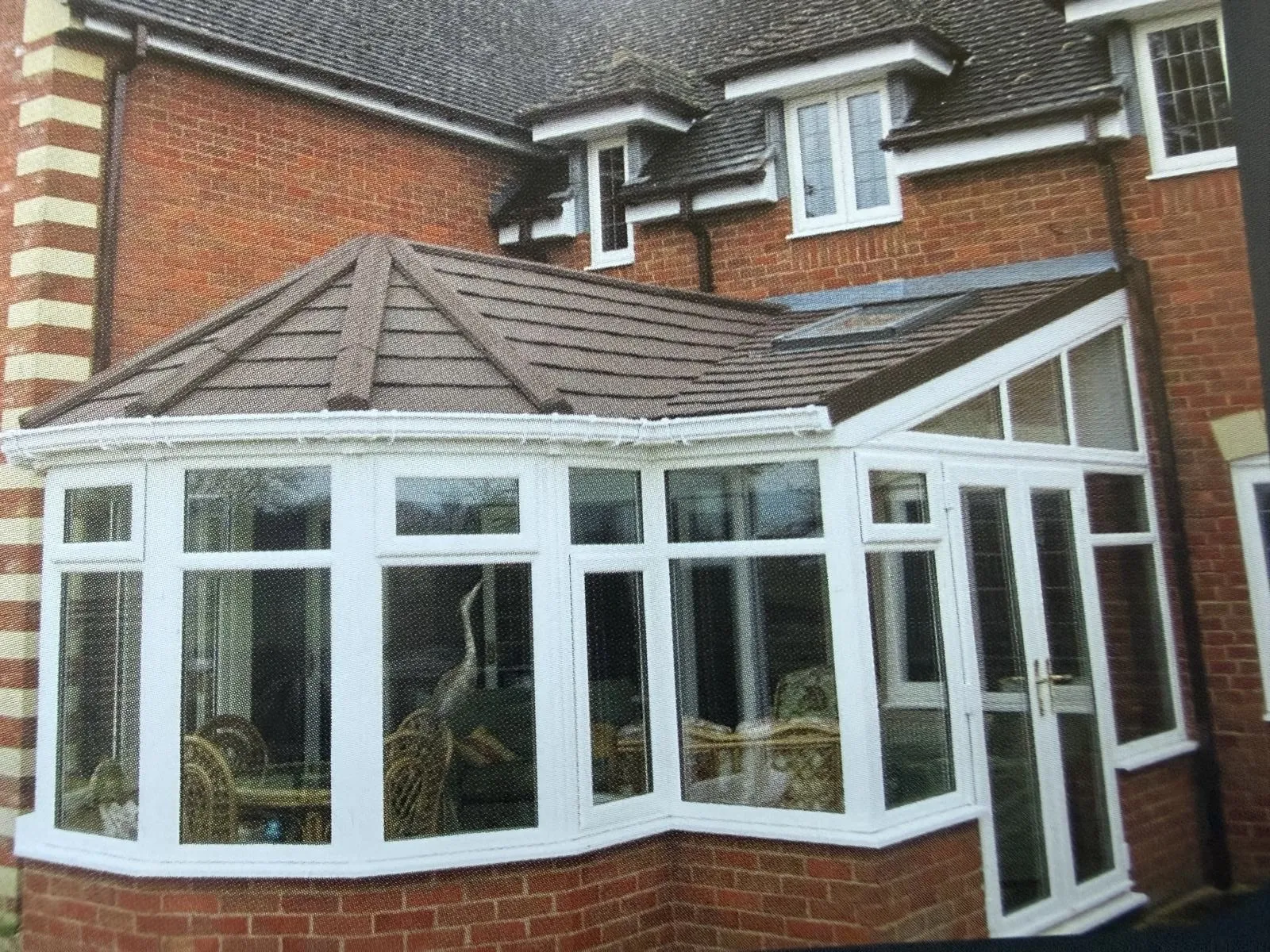
Permitted development conditions
Even where permitted development rights apply, the work must stay within certain limits. The key conditions for a conservatory roof replacement are:
- The new roof must not exceed the height of the existing roof. A lightweight tiled roof system is designed to sit at or very close to the same ridge height as the original, so this is rarely an issue in practice.
- The new roof must not project beyond the existing roof footprint. Since a replacement roof sits on the same walls and frame, this is inherently met.
- Materials should be similar in appearance to the existing house where the conservatory is attached. Choosing tiles that complement or match the main house roof satisfies this requirement.
These conditions are general guidance. Your local planning authority has the final say on what applies to your specific property and location.
Planning permission is not the same as Building Regulations
This is one of the most common areas of confusion. Planning permission concerns what you are allowed to build and how it looks. Building Regulations concern how the work is carried out and whether it meets minimum standards for structural safety, insulation and energy efficiency.
You may not need planning permission but you may still need to satisfy Building Regulations. The two are entirely separate processes. We explain Building Regulations for conservatory roofs in detail on our dedicated Building Regulations page.
How to check whether you need planning permission
The most reliable approach is:
- Check your title deeds and any previous planning approvals for conditions restricting alterations.
- Contact your local planning authority (the planning department of your local council) and describe the proposed work. Many councils offer a free informal advice service. For properties in Kent, this is typically Kent County Council or the relevant district or borough council.
- Ask your installer. An experienced installer will know the common situations that trigger a planning requirement in your area. We discuss this at every survey and will tell you if we think a planning check is needed before you commit.
If there is any doubt, the safest course is to apply for a Lawful Development Certificate from your local authority. This is a formal confirmation that the proposed work is permitted and does not require planning permission. It costs less than a full planning application and provides certainty.
What we do at survey
During every free survey, we discuss planning with you. We look at the property, ask whether it is listed or in a conservation area, and advise whether we think a planning check is needed. We will not proceed with work where we believe planning permission is required but has not been obtained.
This is part of the reason we insist on a site visit before quoting. Planning, Building Regulations and structural suitability are property-specific questions that cannot be answered over the phone.
Related guides
- Building regulations for conservatory roof replacement — what compliance involves and how CERTASS certification works.
- How much does a conservatory roof replacement cost? — typical UK price ranges for 2026.
- Is a conservatory roof replacement worth it? — honest assessment of when it makes sense.
- How conservatory roof replacement works — the full process from survey to completion.
Free survey and quotation
Planning questions are best answered in person, looking at your property. Our survey is free, there is no obligation, and we will give you an honest view of what checks are needed before any work starts.
Call 07889 631 319 or use the form below.
YOUR FREE, NO-OBLIGATION QUOTE
Ready to use your conservatory all year round?
Complete the form to send your enquiry securely to S.R.S Windows Ltd.