ROOF COMPARISON
Tiled vs glass vs polycarbonate conservatory roof
If you are thinking about replacing your conservatory roof, you have three main options: polycarbonate, glass or a lightweight insulated tiled roof. Each has a place, and the right choice depends on how you use the room, what you want to spend and what matters most to you.
We specialise in tiled conservatory roofs here at S.R.S Windows, so we will be upfront about that. But we have been in enough conservatories across Kent and Medway to know that tiled is not always the answer for everyone. Here is an honest look at all three.
Polycarbonate roofs
Polycarbonate was the go-to material during the conservatory boom of the 1990s and 2000s. If your conservatory was built during that period, there is a good chance this is what you have now.
What polycarbonate does well
- Cheapest option. Polycarbonate panels are the most affordable roofing material, both for the panels themselves and for installation.
- Lightweight. Places very little load on the existing conservatory frame, so structural concerns are rare.
- Lets in light. Translucent panels allow daylight through, even if the view is not as clear as glass.
Where polycarbonate falls short
- Poor insulation. Very little thermal performance. The room will be too hot in summer and too cold in winter, which is the single biggest complaint we hear from conservatory owners.
- Goes cloudy and yellow. UV exposure degrades polycarbonate over time. After ten to fifteen years most panels look tired and discoloured.
- Rain noise. Rain drumming on polycarbonate can be genuinely loud. It makes conversation difficult and can wake you at night if the conservatory is near a bedroom.
- Short lifespan. Expect fifteen to twenty years before panels need replacing, sometimes less if the quality was low to begin with.
Polycarbonate still makes sense if budget is the overriding concern and you mainly use the conservatory in mild weather. But for a room you want to use year-round, it is usually the weakest option.
Glass roofs
Glass is a step up from polycarbonate in almost every respect. Modern glass roof panels can include self-cleaning coatings, solar control layers and even heated units.
What glass does well
- Clear views and natural light. Nothing beats glass for letting light flood in. If you want to watch the sky, see the trees or simply enjoy a bright room, glass is hard to argue with.
- Better appearance. Glass looks sharper than polycarbonate and does not discolour over time.
- Self-cleaning options. Coatings like Pilkington Activ break down dirt with UV light and let rain wash it away, reducing maintenance.
- Solar-control glass available. Specialist glass can reflect a portion of the sun's heat, reducing overheating without blocking too much light.
Where glass falls short
- Still hot in summer without solar control. Standard double-glazed roof glass will turn the room into a greenhouse on sunny days. You need solar-control glass to manage this, which adds to the cost.
- Rain noise. Quieter than polycarbonate, but rain on glass is still noticeable. It will not match the silence of a solid roof.
- Expensive to replace individual panels. If a panel cracks or the seal fails, replacing a single unit in a glass roof can be surprisingly costly.
- Insulation is limited. Even good double-glazed units do not insulate as well as a solid, insulated roof structure. You may still need heating in winter.
Glass is often the best choice when maximum natural light is your top priority and you are willing to invest in solar-control glass to manage temperature. If you love the feeling of sitting under a bright, open roof, a good glass setup can work well.
Lightweight insulated tiled roofs
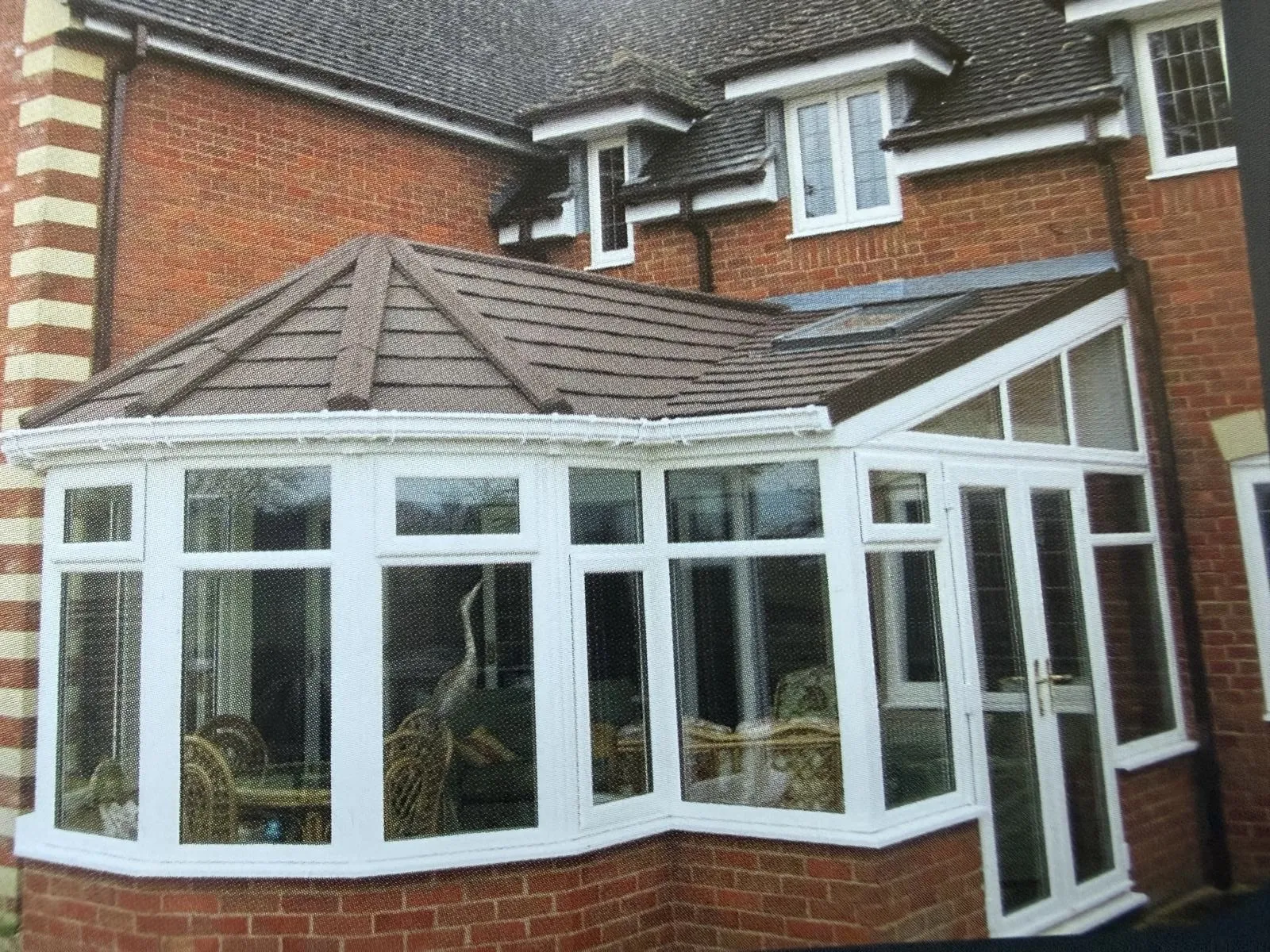
This is what we fit at S.R.S Windows. A lightweight tiled roof replaces your existing polycarbonate or glass with a solid, insulated structure that is engineered to work with your conservatory frame.
What tiled roofs do well
- Best thermal performance. A properly insulated tiled roof keeps the room warm in winter and cool in summer. Many of our customers tell us their conservatory finally feels like part of the house rather than a room they avoid for half the year.
- Quietest option. Rain, hail, wind. You will barely notice any of it. The solid structure and insulation absorb sound in a way that glass and polycarbonate simply cannot.
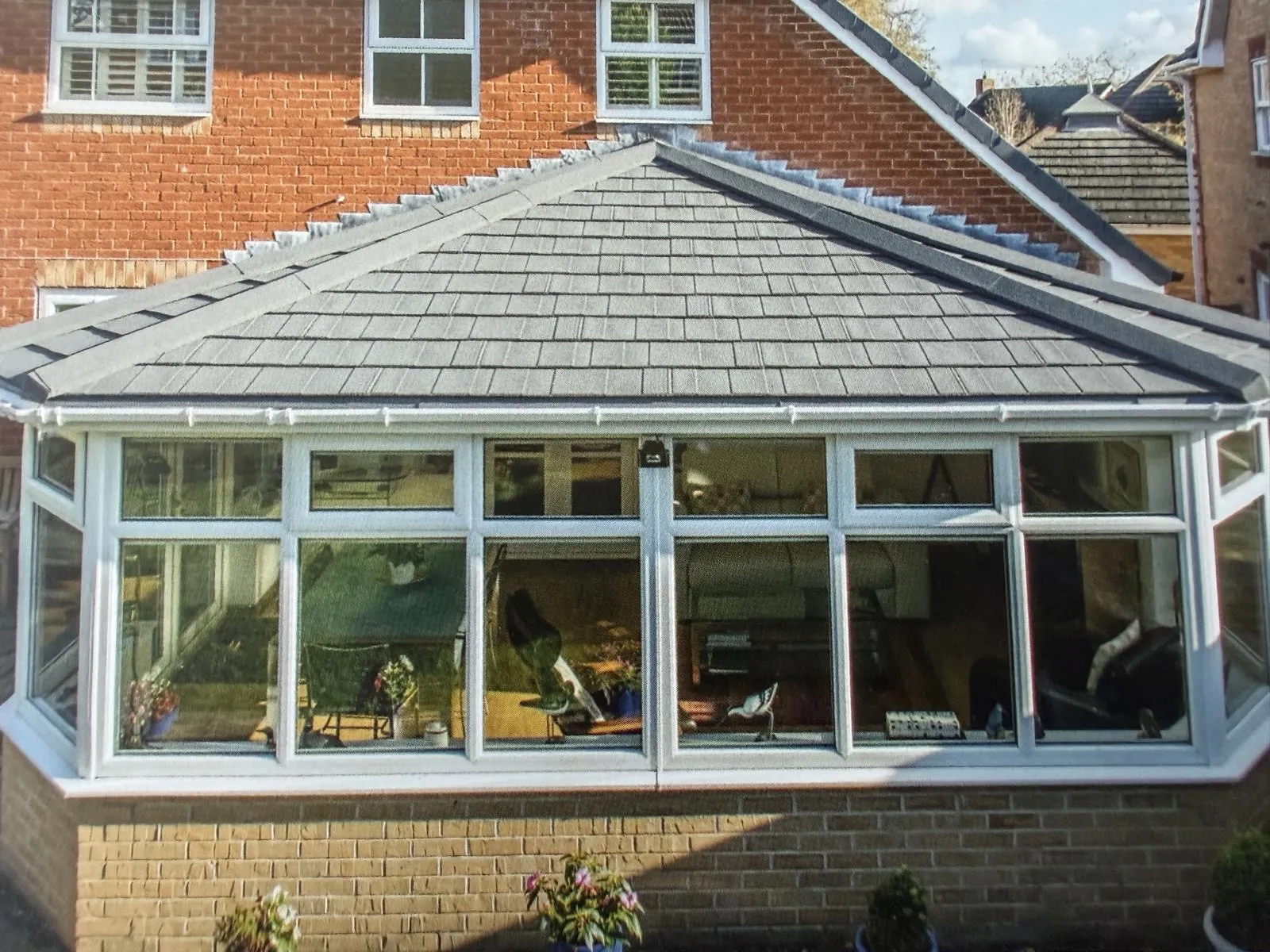
- Feels like a proper room. With plastered ceilings, downlights and a solid roof overhead, the space stops feeling like a conservatory and starts feeling like an extension. That often changes how much the room gets used.
- Long lifespan. A quality lightweight tiled roof should last as long as the rest of your house. We use systems that carry manufacturer guarantees, and they are built to last decades.
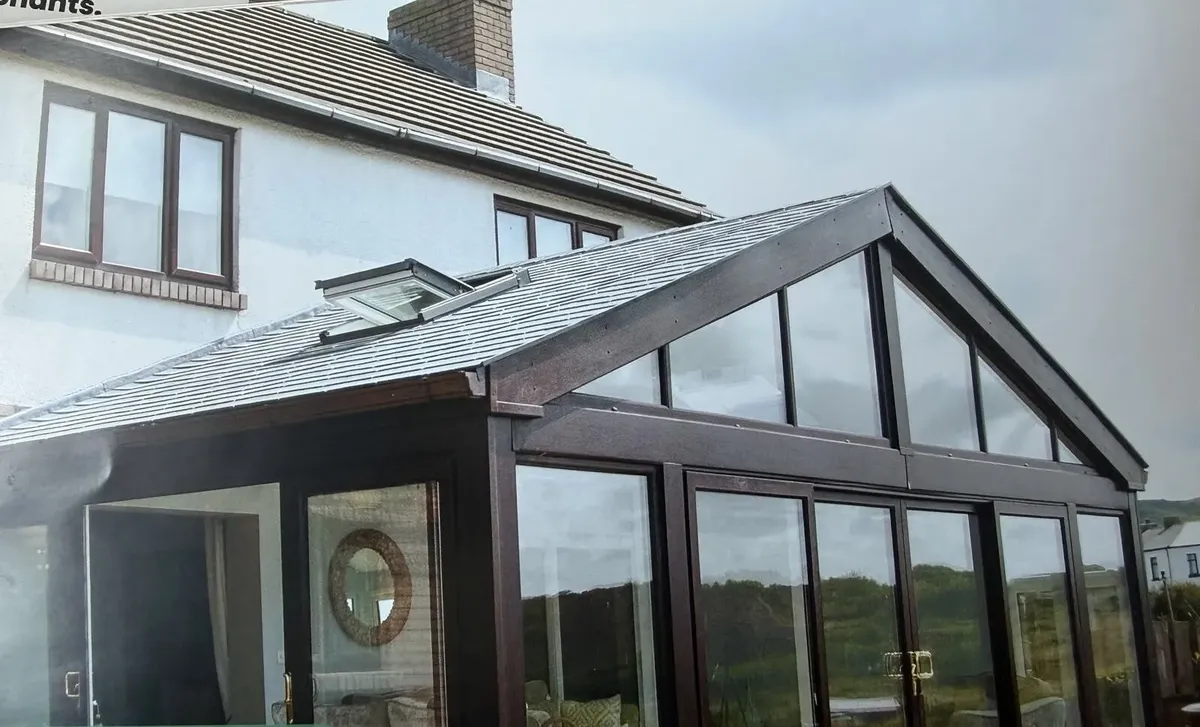
- Can include roof windows. If you want some natural overhead light, Velux-style roof windows can be fitted into a tiled roof to let daylight in where you want it.
Where tiled roofs fall short
- Reduces overhead natural light. This is the main trade-off. A solid roof means you lose the open, bright feeling of a glass or polycarbonate ceiling. Roof windows help, but it will not be the same as a fully glazed roof.
- Costs more upfront. A tiled roof replacement costs more than a like-for-like polycarbonate swap. It is an investment in making the room usable year-round, but the initial outlay is higher. We cover costs in detail on our conservatory roof replacement cost page.
- Requires a structural check. The existing frame needs to be assessed to confirm it can support the new roof. Lightweight systems are designed to work with most conservatory frames, but it still needs checking. We do this as part of our survey.
Which roof type is right for you?
There is no single right answer. It depends on what you value most.
- If maximum light is your priority. Go with glass, ideally with solar-control coatings. If budget is tight, polycarbonate will let light in but with significant comfort trade-offs.
- If you want to use the room all year. A tiled roof gives you the best chance of a room that is comfortable in every season without running the heating flat out in winter or retreating to the house in summer.
- If noise bothers you. Tiled is the clear winner. Glass is acceptable for most people. Polycarbonate in heavy rain can be genuinely unpleasant.
- If budget is the main concern. Polycarbonate replacement is cheapest, glass sits in the middle, and tiled costs the most but adds the most long-term value.
If your conservatory is too hot in summer or too cold in winter, that is usually the strongest argument for a tiled roof. If your existing roof is sound but you want an upgrade, glass with solar control can be a good middle ground.
Things worth reading before you decide
- Cost breakdown. What a tiled roof replacement actually costs: conservatory roof replacement cost.
- Is it worth it? An honest look at whether the investment pays off: is a conservatory roof replacement worth it?
- Planning permission. Whether you need it and when you might: conservatory roof replacement planning permission.
- Building regulations. What the rules say and how we handle compliance: conservatory roof replacement building regulations.
Free survey and quotation
We offer a free, no-obligation survey and quotation for every conservatory roof replacement. We will visit your property, assess the existing structure and talk you through the options that suit your conservatory and your budget.
YOUR FREE, NO-OBLIGATION QUOTE
Ready to use your conservatory all year round?
Complete the form to send your enquiry securely to S.R.S Windows Ltd.