COMPLIANCE
Building Regulations for conservatory roof replacement
If you are replacing a conservatory roof, Building Regulations compliance is not optional. It is a legal requirement. This page explains what is involved, how CERTASS self-certification works, and what happens if the work is not signed off properly.
What are Building Regulations?
Building Regulations are the minimum standards for the design, construction and alteration of buildings in England and Wales. They cover structural integrity, fire safety, energy performance, ventilation and more.
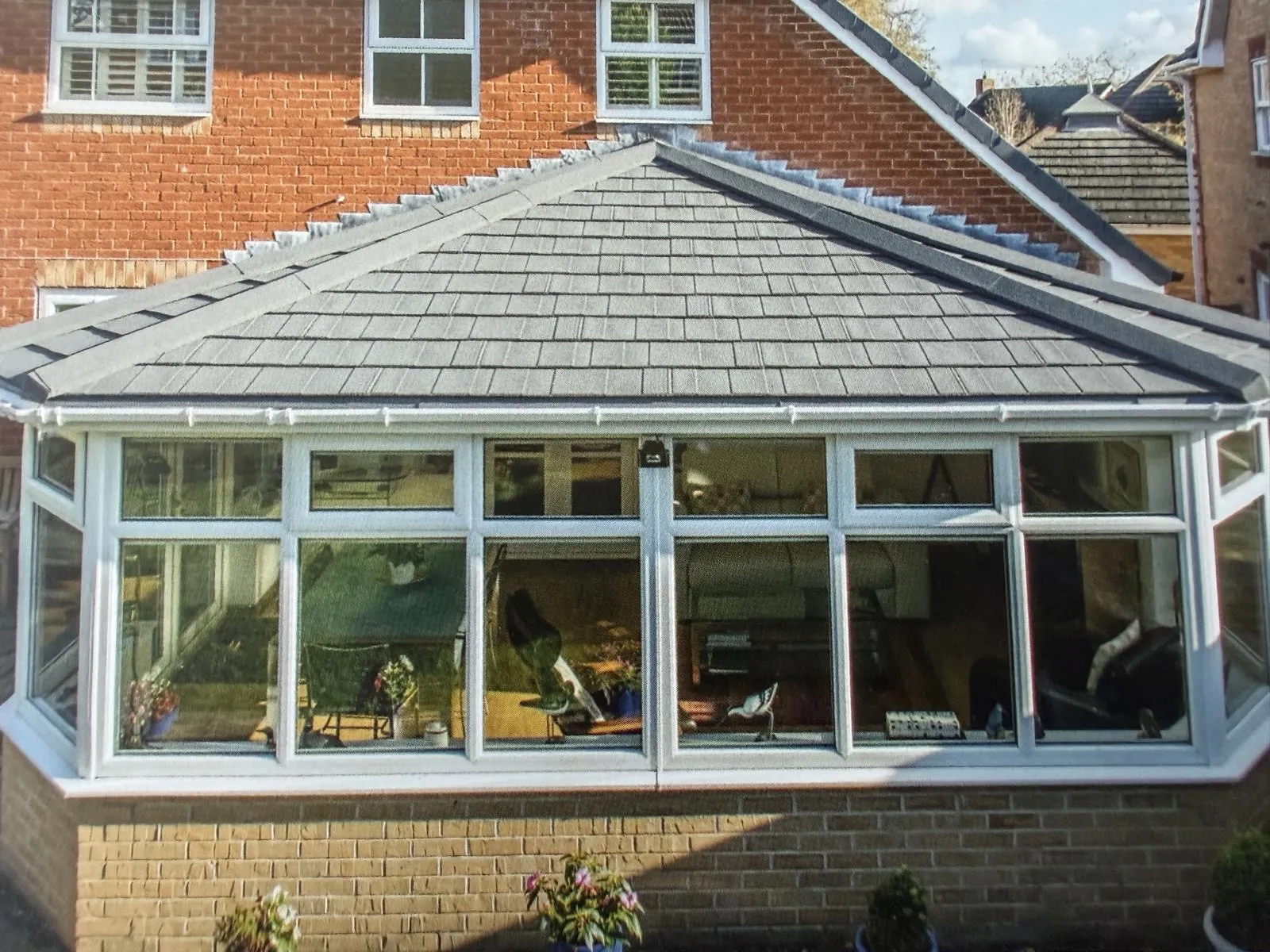
When you replace a conservatory roof — swapping glass or polycarbonate for a lightweight insulated tiled roof — that counts as building work. The new roof changes the thermal performance of the structure, which means it falls under Building Regulations. Specifically, it must meet the requirements of Part L: Conservation of Fuel and Power.
Part L: what it requires
Part L deals with energy efficiency. When you replace a conservatory roof, the new roof must meet certain U-value targets. A U-value measures how well a building element insulates — the lower the number, the better the insulation.
The lightweight tiled roof systems we install are designed to meet or exceed Part L requirements. They use high-performance insulation built into the roof panels, which is a significant part of why they make such a difference to how the room feels and to heating costs.
Part L also considers ventilation. Replacing a leaky old roof with a well-insulated one changes how the room ventilates, so adequate ventilation must be maintained to prevent condensation and ensure air quality.
What is CERTASS?
CERTASS is a Competent Person Scheme authorised by the UK government. It allows registered installers to self-certify that their work complies with Building Regulations, without the homeowner needing to arrange a separate building control inspection through their local authority.
S.R.S Windows Ltd is a CERTASS Certified Installer, registration number 12-1432. When we complete a conservatory roof replacement, we certify the work ourselves and register it with the local authority on your behalf. You receive a certificate confirming the work is Building Regulations compliant.
CERTASS route vs local authority building control
There are two ways to achieve Building Regulations sign-off for a conservatory roof replacement:
- Using a CERTASS registered installer (our approach). We handle the entire process. Once the job is complete, we self-certify the work, notify the local authority and you receive your compliance certificate. There is no separate building control fee and no need to arrange inspections yourself.
- Using local authority building control. If your installer is not registered with a Competent Person Scheme, you need to apply to your local authority's building control department before work starts. They charge a fee (typically £400 to £800), and an inspector must visit the site — usually at least once during the work and once on completion.
Either route results in a Building Regulations compliance certificate. The CERTASS route is simpler and typically cheaper because there is no separate application or inspection fee.
What happens without Building Regulations sign-off
Building Regulations compliance is a legal requirement. If work is carried out without proper sign-off, there are real consequences:
- Selling your home becomes difficult. When you sell, your solicitor needs to produce Building Regulations certificates for any building work. If you cannot produce one for a roof replacement, it can delay or derail a sale. Buyers' solicitors flag this regularly.
- Retrospective approval is expensive. If you need sign-off after the work is done, the local authority may require an inspection and possibly opening up parts of the installation to check what is underneath. That is disruptive and costly.
- Insurance implications. Some insurers may question whether uncertified building work affects your cover.
- Enforcement action. Local authorities have the power to take enforcement action if building work does not comply. In practice this is rare for domestic work, but the power exists.
The simplest way to avoid all of this is to use a CERTASS registered installer. The certification is included as part of the job.
Building Regulations vs planning permission
Building Regulations concern the quality and safety of the building work itself — materials, insulation, structural integrity and ventilation. They apply to almost all conservatory roof replacements.
Planning permission concerns whether you are allowed to make changes to your property — the size, height and appearance of a structure. Most conservatory roof replacements do not need planning permission because they fall under permitted development rights, but there are exceptions.
The two systems are entirely separate. You may need one, both, or just Building Regulations. We cover planning in detail on our planning permission page.
What we check before starting work
Before we begin any conservatory roof replacement, we carry out a survey. Part of that involves checking the things that matter for Building Regulations compliance:
- Structural assessment. The existing frame and base must support the new roof. Lightweight tiled systems are designed to work within the load limits of most existing conservatory structures, but we check every time.
- Thermal performance. We confirm the new roof system will meet Part L U-value requirements.
- Ventilation. Replacing a leaky old roof with a well-insulated one changes how the room ventilates. We ensure there is adequate ventilation to prevent condensation.
- Electrics. If the conservatory has electrical installations affected by the roof replacement, those need to comply too. We coordinate this as part of the overall job.
The certificate you receive
Once we complete your conservatory roof replacement, we register the work through CERTASS. You receive a Building Regulations compliance certificate — the official record that the work meets the required standards. Keep this certificate safe; you will need it if you ever sell your home. The work is also registered with your local authority, so there is a record on file.
Related guides
- Do I need planning permission? — when permitted development applies and when to check.
- What is a CERTASS certified installer? — why it matters and how to verify.
- How much does a conservatory roof replacement cost? — typical UK price ranges for 2026.
- Is a conservatory roof replacement worth it? — honest assessment of when it makes sense.
- How long does the work take? — realistic timelines and what affects them.
Free survey and quotation
Building Regulations questions are best answered once we have surveyed your conservatory. Our survey is free, there is no obligation, and we will give you a clear picture of what compliance involves for your property.
Call 07889 631 319 or use the form below.
YOUR FREE, NO-OBLIGATION QUOTE
Ready to use your conservatory all year round?
Complete the form to send your enquiry securely to S.R.S Windows Ltd.